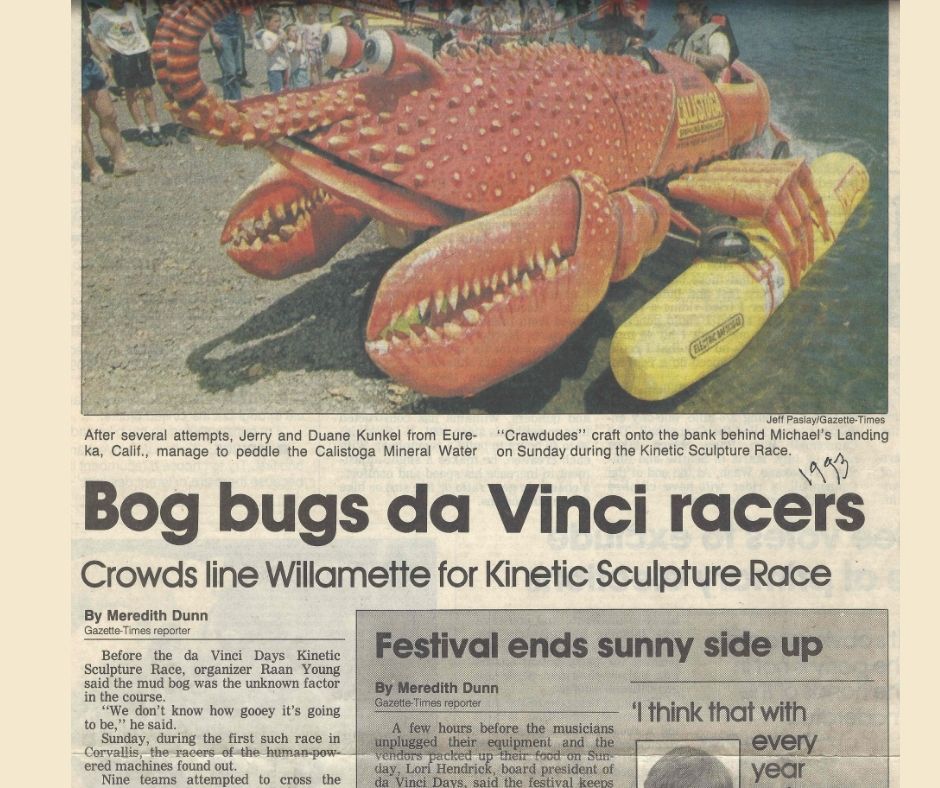
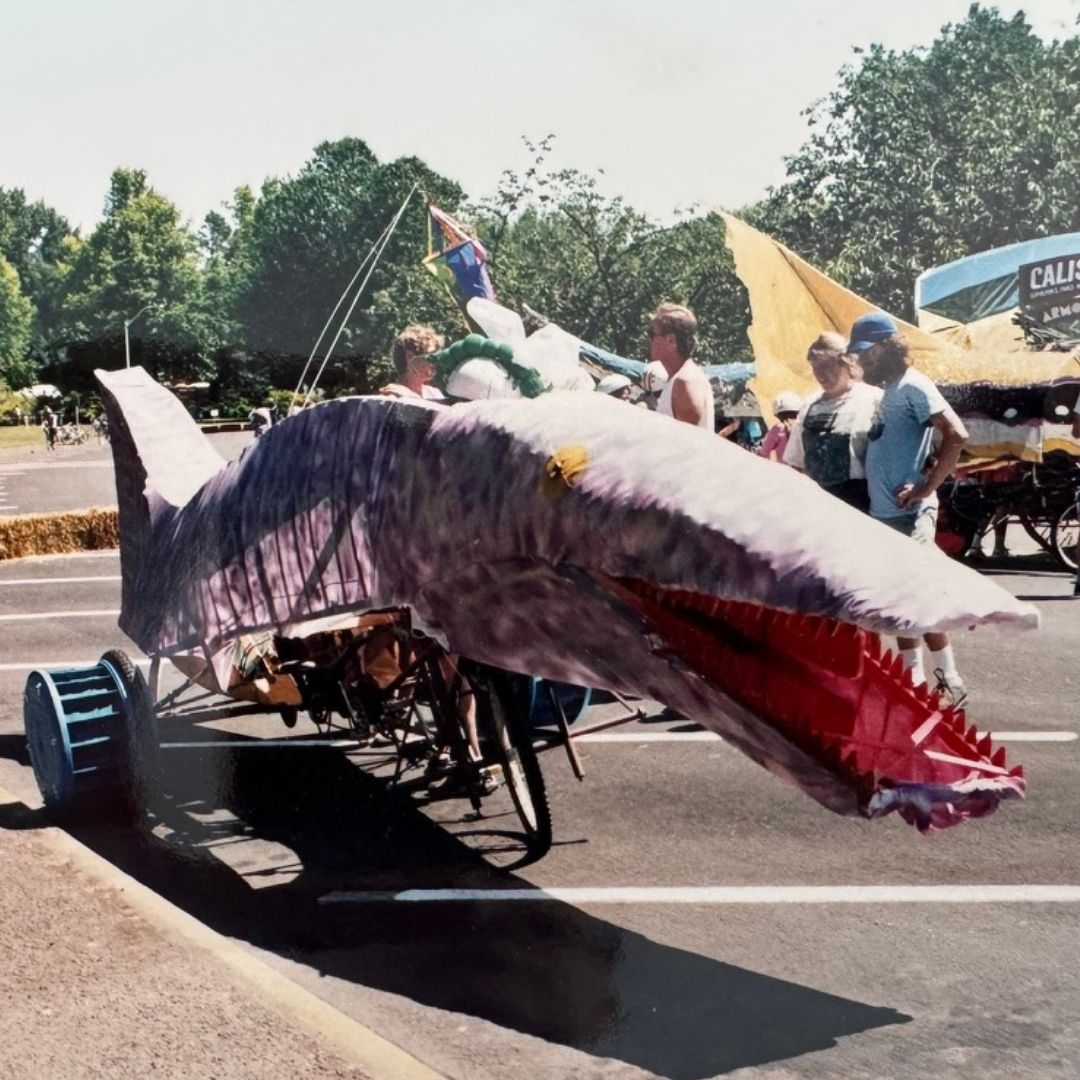
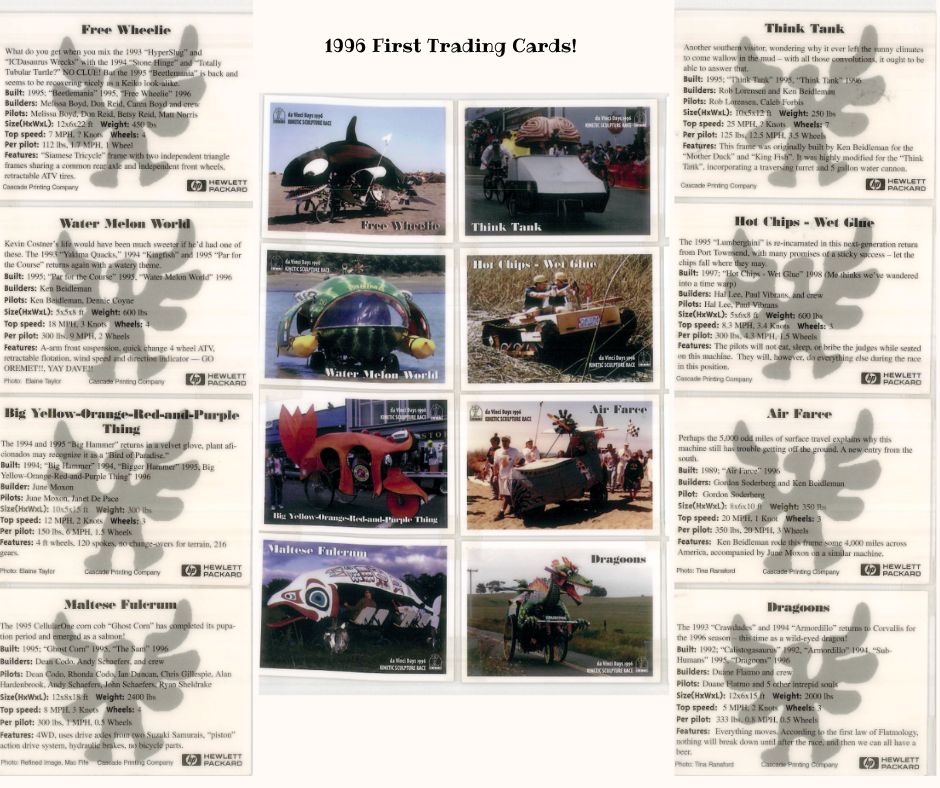
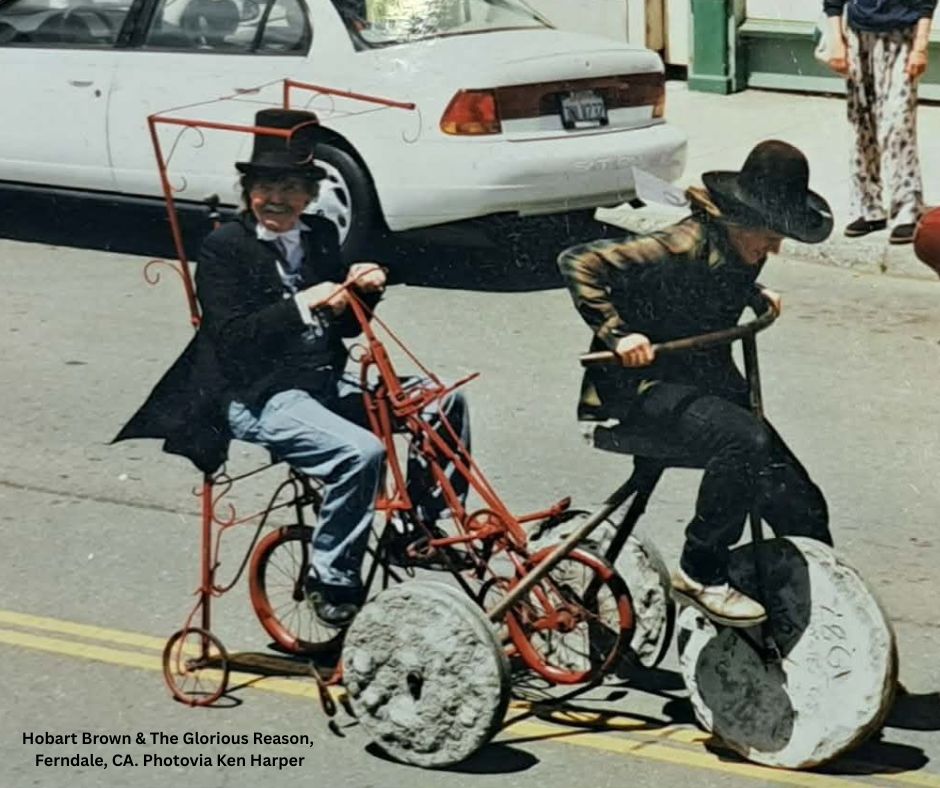
GKC Timeline Graand Kinetic Challenge History Timeline 1992 Raan Young meets the Eureka “Kinetic Kids” and gets inspired to build a machine… which never actually happens. 1993 With a $500 budget and a lot of persuasion, the first Corvallis Kinetic Sculpture Race launches as part of da Vinci Days. 1994 The race expands to two days, adds a parade, mud, river, and introduces the now-iconic Graand Kinetic Wizard. 1995 & 1996 1995: Traditions grow with construction classes, the first racer booklet, and the debut of the “I Did It” shirt. 1996: Trading Cards introduced. 1997 The sand dune obstacle debuts (chaotically), and the official “Vitruvian Chicken” logo is created. 1998 The race grows in size and complexity as founding organizers begin passing the torch to a new generation. 1999 Pageantry takes center stage, the parade returns to Saturday, and the race undergoes its first major leadership transition. 2000-2001 The event stabilizes and grows, with larger teams, evolving awards, and a strong multi-state presence. 2007 Kinetic race founder Hobart Brown passes away, leaving a lasting legacy of “adults having fun so kids want to grow up.” 2008 The Corvallis race is officially renamed the Graand Kinetic Challenge in honor of founder Raan Young. 2011 The Dan Monk Award for fastest water speed is introduced, and author/humorist Dave Barry rides a kinetic sculpture. 2014-2016 The da Vinci Days Festival pauses, but the Kinetic Challenge continues and helps spark its return. 2020 The festival closes during the pandemic; the Kinetic Challenge pivots to a virtual race. 2021 The race returns to in-person, proving its resilience (and stubbornness). 2023 The event pauses for a year due to organizational challenges. 2024 The Graand Kinetic Challenge relaunches with new leadership and renewed energy. 2026 In partnership with OSU, a new da Vinci Days-inspired festival emerges, continuing the spirit of art, science, and joyful chaos.